Objectives
Background and aims of the project:
The main aims of this project and its background come from important problems in youth work and digital literacy in Türkiye. According to the 2018 results of the "Information Society Statistics" survey by the Turkish Statistical Institute, computer use in Türkiye was 97% and internet access 95.3%. Despite this high level of access to technology, the digital literacy of young people and of society in Türkiye is lower than expected. In particular, assessments by the International Institute for Management Development (IMD) show that Türkiye lags behind in international comparisons in "knowledge", "technology" and "future readiness".
The main goal of the project was designed to respond to this challenge and to raise the digital literacy of young people aged 18–25. Our main aims were:
To develop the digital literacy competences of 32 young people aged 18–25 living in four European countries and help them become responsible users.
To raise young people's awareness of how to tell true from false information online, and increase their knowledge of safe internet and digital media.
To enable these young people, with their new competences, to take the initiative and organise social media campaigns for their own communities, helping hundreds of other young people become more aware of the digital world.
To promote non-formal education in the youth field, support intercultural learning, reduce any prejudices about other cultures and increase positive awareness.
To add a new dimension to young people's perspectives through social media, and develop positive awareness and a critical view of digital literacy, digital media, safe internet and cyberbullying.
These aims seek to create positive effects at individual and community level by helping young people act in the digital world in a more conscious and competent way. The implementation of the project and the evaluation of its results made an important contribution to young people's future digital needs.
Activities
Implementation:
Within our project we carried out a range of events and activities. Below are the details of the activities and the participant profile:
Getting-to-know-you and name games: at the start of the project, a getting-to-know-you session strengthened communication among participants. Name games helped them get to know each other better.
Icebreakers: icebreaker games were organised to develop cooperation within the group. Designed to build harmony among participants, these activities made later cooperation in the project more effective.
City hunt: a city hunt encouraged teamwork. Participants cooperated to complete tasks within a limited time.
Digital realities in our country: participants from each country presented the digital world of their country to the others. This session increased cultural exchange and mutual understanding.
Workshop on the psychological effects of technology: Dr Kaan Mert Güven gave participants an interactive session on the psychological effects of technology.
Online citizenship: participants explored what it means to be a citizen in the digital world. For active citizenship online, they developed knowledge and skills in fact-checking, social change and advocacy, digital well-being and digital safety.
Preparing the cultural nights and cultural nights: participants prepared cultural nights to build group unity and introduce their cultures to each other, sharing dances, food, music and games.
Online presentation techniques: participants learned how to present in the digital world and in front of a camera, and practised to improve.
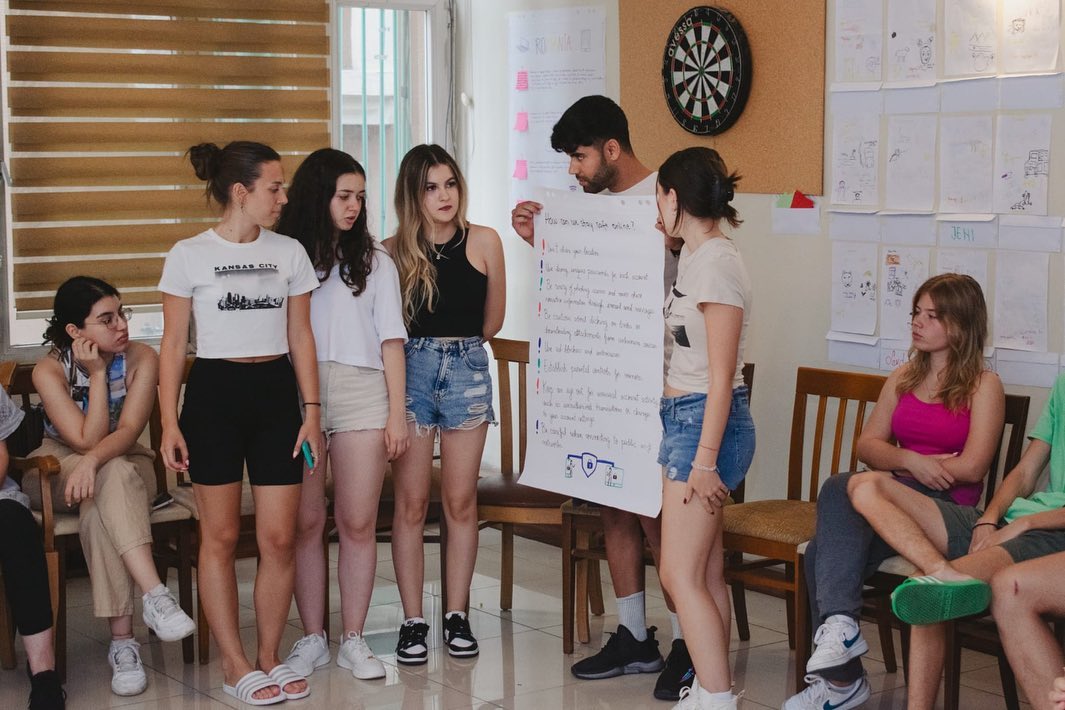
Campaign planning sessions: participants learned advocacy and campaign planning from an expert trainer and started working on campaigns in workshop groups.
Campaign presentations and feedback: participants worked together, giving each other feedback to create more effective campaigns.
Cultural trips: visits to two large cities, Istanbul and İzmit, increased participants' cultural awareness.
E-booklet, campaign and short film: the whole team worked together on each of these outputs.
Campaign implementation session: we shared the results of the project with our national and international partners, including a visit to the Kocaeli Youth and Sports Directorate and the Kocaeli International Youth Centre, where the campaign outputs were shared with staff, volunteers and young people.
Erasmus+ and ESC introduction workshops: participants learned about Erasmus+ and the European Solidarity Corps.
Project development: a space was created to discuss and develop future projects.
Youthpass non-formal education session: participants were introduced to the Youthpass certificate, which helped them recognise the experience they gained in the project.
Youthpass certificate session: participants completed their Youthpass certificates through self-assessment.
Interactive daily evaluations: participants reflected on the workshops and activities.
Participant profile:
The participants were young people with a variety of characteristics and needs. To make sure they could take part successfully, the following criteria were applied:
- Interested and motivated in youth work.
- Open to communication and new ideas, and respectful of differences.
- Interested or skilled in digital competences.
- Motivated for intercultural teamwork.
- Participants were selected from Spain, North Macedonia, Romania and Türkiye.
- From Spain, young people facing geographical, economic and social obstacles.
- From North Macedonia, young people facing economic and social obstacles.
- From Romania, young people with physical and social obstacles.
The youth exchange programme was designed with participants' learning and physical needs in mind, and the sessions above were delivered in cooperation between the group leaders.
Impact
Results and impact:
The project achieved important results and impact:
Digital literacy awareness: participants became more aware of digital literacy and safe internet use, improving their ability to use the digital world responsibly.
Cooperation among young people: the project built strong cooperation and group dynamics. Young people from different cultures made new friendships by working together, and those who had never met people from other countries developed intercultural expression and awareness.
Youthpass certificates: participants recognised their experience with Youthpass certificates and learned how the certificate can help in future job applications.
Cultural awareness: by interacting with peers from other countries, participants increased their cultural awareness, gained a global perspective and challenged their prejudices.
Awareness of digital addiction: the digital addiction workshops encouraged participants to use technology consciously and made them aware of its psychological effects.
Campaign development skills: through the campaign planning sessions and work, participants improved their campaign development skills, giving them strong tools to influence their communities.
Foreign-language skills: participants improved their foreign-language and communication skills by interacting with peers from other countries.
E-booklet and short film: the e-booklet and short film produced by the project were created by young people for young people, as resources on digital literacy and safe internet use. The short film was made to reach a wider audience.
International cooperation: the project encouraged international cooperation, and participants created new opportunities to work with young people from other countries.
Sustainability: to keep the effects going, future projects and continued partnerships are planned.
Local and national awareness: the project raised awareness at local and national level of digital literacy, the Erasmus+ programme and the eight key competences. Young people who had never taken part in Erasmus+ learned about its opportunities.
The results and impact of the project supported participants' personal development and contributed to a generation that is more aware of the digital world. We believe these effects were key to reaching the project's aims.
Partners
- 🇹🇷Aktif Yasam Grubu
Türkiye - 🇲🇰ZDRUZENIE CENTAR ZA INICIJATIVI I AKCIJA GOSTIVAR
North Macedonia - 🇷🇴Asociatia MasterPeace Ro
Romania - 🇪🇸Asociación Socio-Cultural VerdeSur Alcalá
Spain
From Instagram
Co-funded by the European Union. Views and opinions expressed are however those of the author(s) only and do not necessarily reflect those of the European Union or the Turkish National Agency (Türkiye Ulusal Ajansı). Neither the European Union nor the granting authority can be held responsible for them.