
Objectives
Urban gardening, urban agriculture or urban farming, is the practice of cultivating, processing, and distributing food in or around a village, town, or city. It’s a broad definition which includes several scenarios, from huge farms for intensive production to local gardens managed by social movements for sustainable communities, where organic growers, ‘foodies,’ and ‘locavores’ form social networks at a local level. Urban gardens often reflect the characteristics of the area.They are usually supported by non-profit organizations and are an economic added value in low-income areas providing food and answering other needs. In developing countries, held land.
The Food and Agriculture Organization of the United Nations (FAO) asserts that urban vegetable gardens can be much more ecological and efficient than traditional ones, producing as much as 20 kg of food per year per square metre. We explain to you what this domestic horticulture involves and how to set up a vegetable garden at home.Urban agriculture is changing the landscape in cities, with thousands of small-scale operations proliferating that are growing plants and raising animals either at ground level or on rooftops and terraces. This sustainable movement, which many countries still do not recognise as a formal activity, is practised by 800 million people worldwide and helps low-income citizens save money on food purchases, according to the FAO. In light of these aspects, we have decided to share the experience of young people that we already have and make them teach their experiences to the other young people from different countries to increase the involvement of disadvantaged populations to the communities as urban gardeners.
Above all, aging of the European Farmers continue to be an issue to tackle in Europe concerning to the food security and the inclusion and employability in the rural areas. In 2016, for every farm manager under 40 there were three farm managers over the age of 65 in the EU. The ageing of Europe’s farmers is one of the greatest challenges that rural areas are facing. European Commission has put a place a policy as "Common Agricultural Policy" but its impact on generational renewal is mostly positive, but remains limited notably in regions lacking basic infrastructure and services. In the same policy paper, it is indicated that 43% of the young farm managers do not have any practical experience to tackle with the issues that can happen. In that sense, increasing the young people's experiences to make them aware the possibility of making gardens in their houses will promote their involvement to the agricultural production process and increase their skills in that regard.
Urban gardens are promoting the young people engagement with the soil and the nature and make them understand about the food security and promotes their engagement in the rural areas to the agricultural processes.As Verdesur Association, within our ESC Programme, we have been implementing Urban Garden trainings for the young people in our community and involving our ESC volunteers, young people and adult population to development of the garden for 2 years now. During the project, we plan to cover the following themes related to urban gardening : settlement of the urban gardens, climate change, food security and the biodiversity. With covering these themes, the participants will develop their own urban gardens in their own communities within the premises of the participating organisations and we will create the big one in Alcalá la Real with the help of local community and the participants. The young people from the community will engage the development of the urban garden jointly and the participants will experience the process in Spain first, prior to developing the urban gardens in their communities.
The specific objectives of the project:
- To increase the understanding of the issues concerning food security among young people in Europe and neighbouring countries
- To qualify young people as urban gardeners to create urban gardens in their own communities with theoretical and practical skills concerning Urban gardening
- To make young people aware about the benefits of the urban gardens in the daily life
- To increase the young people's skills on gardening and development of urban gardens and making them reflected concerning to issues of agricultural production in urban areas
- To create a local impact in Alcalá la Real by including local community engage in the urban gardening process to make them benefit from this directly
Activities
The project activity will be implemented between 15-23 2025 with 38 participants ( 5 participants + 1 leader ) from 6 different countries ( Serbia, Hungary, Germany, Austria,Türkiye, Spain ) in Alcala la Real as Youth Exchange. Number of participants in Spanish group is higher than the other groups though during the activities, as there will be 2 facilitators and 1 leader providing assistance to the overall participants.
The activities will be based on non-formal education and the activities will be carried out the participants will learn from each other. In the process, the leaders will be responsible about the implementation of the activities. Facilitators will support the leaders and participants with technical and logistical support during the activities. The methods will be based on outdoor activities, group work and case studies.
The aims of the activity :
1.To qualify young people with the practical and theoretical skills to develop urban gardens in their own communities
2. To make young people share the challenges in front of inclusion, food security and community development
3. To create awareness on the participants about the use of urban gardens to tackle with the issue of food security in Europe and the world
4. To create awareness on the participants about the food security issues in Europe
5. To develop the skills of the participants in the field of youth and urban garden and demonstrate its use in the field of inclusion and community development
Day by day explanation of the methods we will apply during the project process:
1 day :
(09: 00-17: 00) Arrivals
(19-00: 21: 00) Welcome Gardeners!, Meeting and Presentations
(21:00 - 23:00) Welcome Evening
2 day :
(10: 00-11: 30) Getting to Know Each Other : Name Games, Group work
(12:00 - 14:00) Ice Breakers: Group Work
(16:00 - 17:30) Group Dynamics: Mission Impossible
(18:00 - 19:30) Non-Formal Education and Youthpass: Role play and presentations
3 day :
(10: 00-11: 30) What is food security?
(12:00 - 14:00) Huertos Urbanos y Desarrollo Comunitario
(16:00 - 18:30) Inclusión a través de Huertos Urbanos
(18:30 - 19:00) Self-Assessment Groups: Reflection
(21:00-22:00) Serbian-Hungarian-German Cultural Night
4 day :
(10: 00-11: 30) Urban Gardens – 1 : Theoretical Aspects of Urban Gardens
(12: 00-14: 00) Urban Gardens – 2 : Practical Aspects of Urban Gardens
(14:00 - 18:00 ) Cultural Site Visits
(21:00-23:00) Turkish-Spanish and Austrian Cultural Night
5 day :
(10:00 - 14:00) Urban Gardens – 3 : Field Trip & Planning the Urban Garden
(15: 00- 18:30) Urban Garden – 4 : Field Trip & Planning the Urban Garden
(18:30 - 19:00) Self-Assessment Groups: Reflection
6 day:
(10:00 - 18:00) Developing the Garden with the local community
7 day:
(10:00 - 14:00) Developing the Garden with the local community
15:00 – 18:30) Planning Urban Gardens in their countries
8 days :
(10:00 - 11:00) Erasmus +: Simulation and Presentations
(11:00 - 16:30) Planning of Projects: Group work and visual presentations
(17:00 - 19:00) Evaluation and Youthpass: Reflection and presentation
Day 9:
(09:00) Departures
Profile of the participants :
- Have an interest on the development of urban gardens on its usage on community development
- Have willingness to develop urban gardens in the organization and in Spain
- Sensitive to the climate change and food security issues
- Has a basic level of English ( A2 – B1 )
- Has economical / educational / social or geographical obstacles ( young people with fewer opportunities ) – Half of the group in each participating country
- Have no experience abroad ( the positive selection criteria )
- Willing to discuss about the climate change, food security and inclusion issues in Europe and the world
- Willing to engage in an urban garden practice in Spain with the local community and implement the same activities in their own country
- Willing to involve in intercultural and international activities
Impact
The project will increase the skills of young people who has no experience with the agricultural product development or has no prior experience to the gardening. In that way, the young people will gain experiences both urban gardening and boost the participation of young people in the local community. The project will empower the young people to do urban gardens not only within their organisations but in their own houses by using the theoretical and practical experiences to do so.
The activity will create an impact on the young people by making them develop urban gardens in their own communities to address the issue of food security, create an awareness about the issues concerning the climate change and the food security derives from the lack of spaces to produce food. Urban Garden is as well as a tool to promote the community development due to its engagement with the local population during their stay in Spain and in their own countries after the follow-up urban gardens in the participating countries. The case studies to be implemented during the project will give young people and opportunity and increase their ability to engage with the local population and make the local populations aware about the issues of the food security and the access to the food by the people who are at risk of poverty.
The young people will become qualified practitioners concerning to the urban garden development as a result of the activity. They will develop as a group a new urban garden in their country within the organisation premises or the premises that are provided by the municipalities like in our case. In addition to that, they will plan to implement new Erasmus+ projects and different mobilises to engage the other young people in the mobility activities within and outside of Erasmus+ Programme. In addition to that, the project will benefit the young people by creating awareness on the issues concerning to the food security, climate change and the urban gardening. In addition to that, due to engagement of young people from different countries, the project will increase the cultural expression skills of young people and make them aware about the cultural differences.
Due to implementation of the urban garden methodology, the young people will become more aware about the issues concerning to the aging and the issues of the young people in the rural areas. The urban garden methodology will give participants an understanding about the issues concerning to the food security and reaching out to the food in the low socio-economic background communities. In addition to that, the young people will learn about the possible advantages of the urban garden concerning the food security and reducing the consumption in terms of food due to their experiences within the project. Moreover, the participants will engage the Spanish community to the project which will give them an opportunity to see the Spanish reality and will work with the Spanish young people to develop the urban garden. In the 7th day of the project activity, the participants will work jointly with the local community members to develop a urban garden to give them an experience to implement such activities in their own communities with both the theoretical and practical skills to set up a urban garden. In that way, they will learn about the implementation ways of the urban garden methodologies and their knowledge in that regard will increase.
Participants will learn about the practical and theoretical skills concerning to the food security and urban gardens and it will help them to develop skills by using the methods that they have learn concerning to the creation of urban gardens and community development and inclusion through the usage of urban gardens. They will become more aware about the issues of the low income communities are facing when it comes to reach out the food and they will become change makers to promote this awareness to tackle with the issue of the food security in the communities. In that way, the project will not only increase the theoretical and practical skills but make young people to engage their communities to the implementation of urban garden activities. In addition to that due to implementation of the activities in English and Spanish due to the local community involvement, the participants language skills concerning to the different languages will increase and it will create a long-lasting impact on the young participants' life. Moreover, the skills of the participants will increase due to implementation of the follow-up actions in the participants countries as they will involve the young people who are interested in developing urban garden activities.
Partners
- 🇪🇸ASOC SOCIO CULTURAL VERDESUR ALCALA
Spain - 🇷🇸Development Center of Vojvodina
Serbia - 🇭🇺Hidak Ifjúsági Alapítvány
Hungary - 🇹🇷GAZIANTEP EGITIM VE GENCLIK DERNEGI
Türkiye - 🇦🇹Compass - Beratung, Begleitung und Training Gemeinnützige GmbH
Austria - 🇩🇪planIMPACT - Verein für Menschenrechte, Frieden und Entwicklung e.V
Germany
From Instagram
Reels load from Instagram when you play them.
Related news
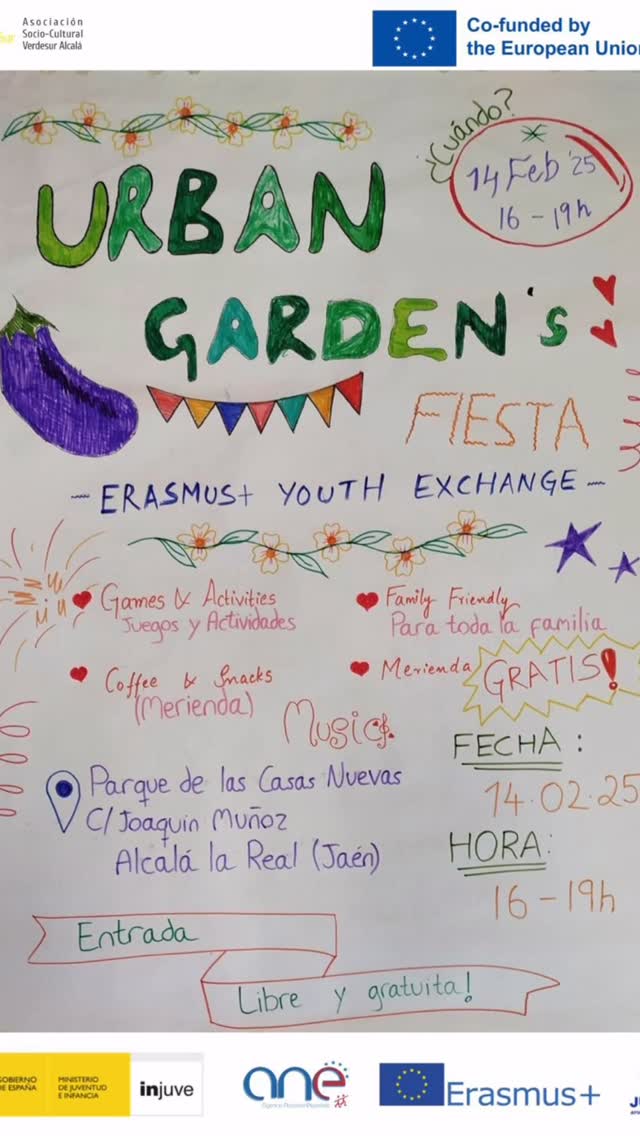
Urban Gardens for Youth builds a community garden in Santa Ana
Young people from six countries built an urban garden in Santa Ana, Alcalá la Real, from 8 to 16 February 2025, ending with a party for the...
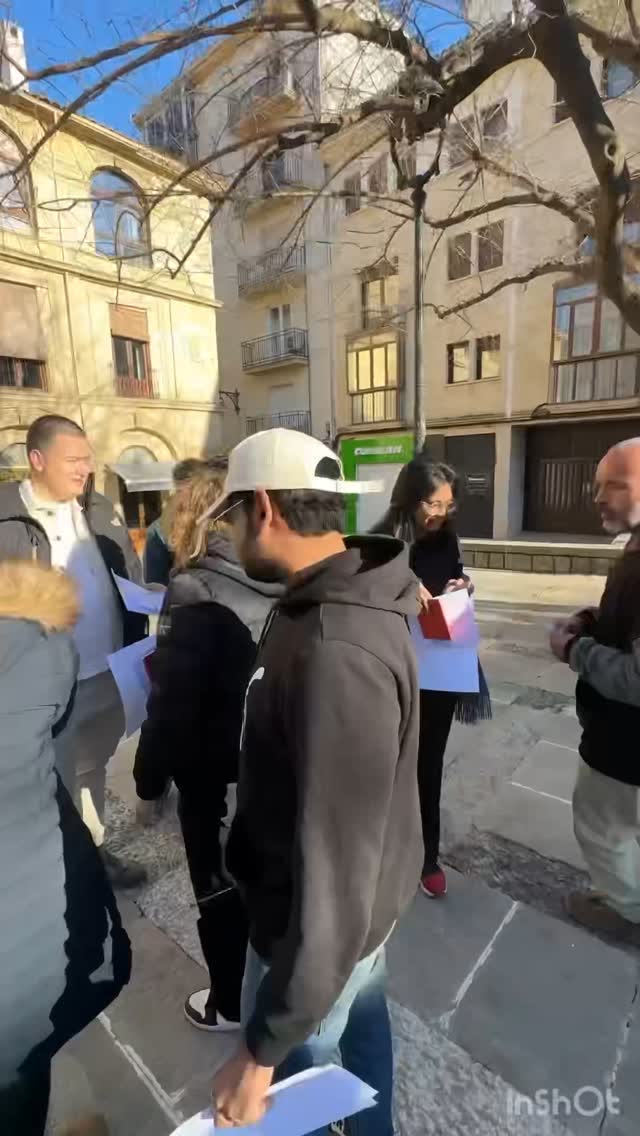
Young Gardeners project opens its urban garden to the community
The “Youth Gardeners” urban garden is taking shape, and today the project welcomes the local community with activities on sustainable growin...
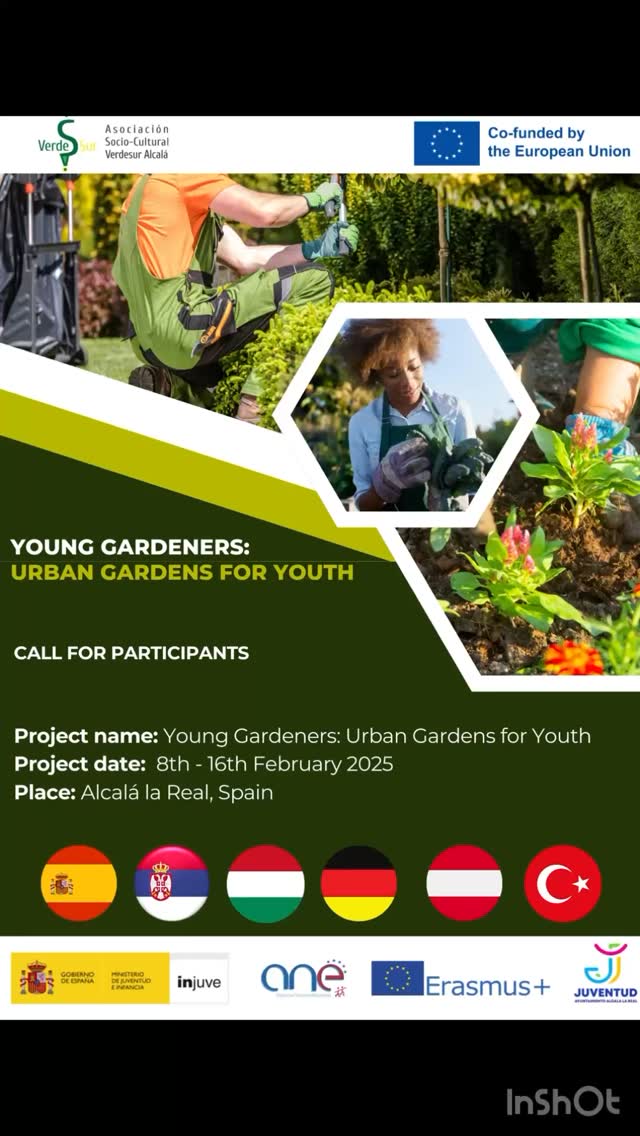
Young Gardeners youth exchange starts in Alcalá la Real
Young people from Germany, Austria, Serbia and Turkey arrive in Alcalá la Real for an Erasmus+ youth exchange on urban gardens, running unti...

Co-funded by the European Union. Views and opinions expressed are however those of the author(s) only and do not necessarily reflect those of the European Union or the Spanish National Agency for Erasmus+ Youth and the European Solidarity Corps (INJUVE). Neither the European Union nor the granting authority can be held responsible for them.