Ética del trabajo juvenil
The purpose of youth work is to facilitate and support young people’s growth through dependence to interdependence, by encouraging their personal and social development and enabling them to have a voice, influence and place in their communities and society.Ethics is generally regarded as being…
Objetivos
The purpose of youth work is to facilitate and support young people’s growth through dependence to interdependence, by encouraging their personal and social development and enabling them to have a voice, influence and place in their communities and society.Ethics is generally regarded as being about the norms of behaviour people follow regarding what is good or bad, right or wrong. Usually ethical issues are about matters of human (and animal) wellbeing or welfare. Although, ethical youth work practice is often defined through a set of ethical “standards” encompassing ethical principles and values, specific rules and policies, and moral qualities, dispositions and competences (Banks,2000).
While implementing local, national and international projects, we have quality schemes put by the European Commission though, we have our own way of implementing activities. Ethical issues are therefore endemic in youth work. As an activity or social practice, youth work involves working with participants who have fewer rights than adults, are often vulnerable, lack power and may be suggestible – hence giving scope for their exploitation, harm or manipulation. As an occupation working within the welfare system, youth work shares with social work, nursing and medicine the classic tensions between respecting individual choice and promoting the public good; and between empowering and controlling its service users. Insofar as it is an occupation concerned with providing a service, youth work shares with a broad group of occupations, commonly classed as professions, concerns about the professional integrity, trustworthiness and honesty of its practitioners.
Within this training course, we increased the competences and knowledge of the youth workers on the issue of ethics in youth work and make them aware about the ethical questions and the code of conduct and value development for the organisations. We dealt with the case studies from Europe and try to understand and analyse these case studies to increase the knowledge and awareness of youth workers in the field of ethics and its usage in youth work.
Within this training course, we made the youth workers to reflect about the ethical issues in their daily work through a set of virtual and face to face activities. We increased the capacities of youth workers to conduct their work and develop ethical practices which are about building trust by role-modelling ethical behaviour, and applying principles and values consistently in decision-making. According to our research in Erasmus+ Results Platform focusing on the ethic of youth work, there has been no similar projects targeting the youth workers by making them discuss the ethical issues from both theory and practices. Therefore, the project filled this gap in the youth work as an initiation to develop new activities and practices and reflect upon the our previous projects as partners.
The project gave an idea to the youth workers about their ethical practices and how they conduct the youth work from the international activities to local activities that they engage with the young people and how the youth work processes can be tailored to the young person's needs without creating a harm or disturbance in the communities. We have identified the gap within the projects that are run. We implemented this project to increase the youth workers awareness on the ethical issues and dilemmas in the field of youth work by making them working on the cases to explore the ethical practices and ethical dilemmas in the youth work and providing them with the resources to deal with these dilemmas to promote the quality youth work and develop the youth workers competences in the field of ethics.
The objectives of the project are;
- To equip youth workers for promoting the ethical practices in the field of youth work by increasing their awareness on the ethical questions in the youth work practices
- To make youth workers able to develop code of conduct guidelines and policies for their organisations to increase the quality of the youth work
- To make youth workers able to make ethical decisions and develop programs focusing on ethics education by analysing the situation in their own communities
- To make organisations internalise the ethical practices from development to implementation of the project activities
- To develop partnerships in the field of youth work and ethics of youth work
Actividades
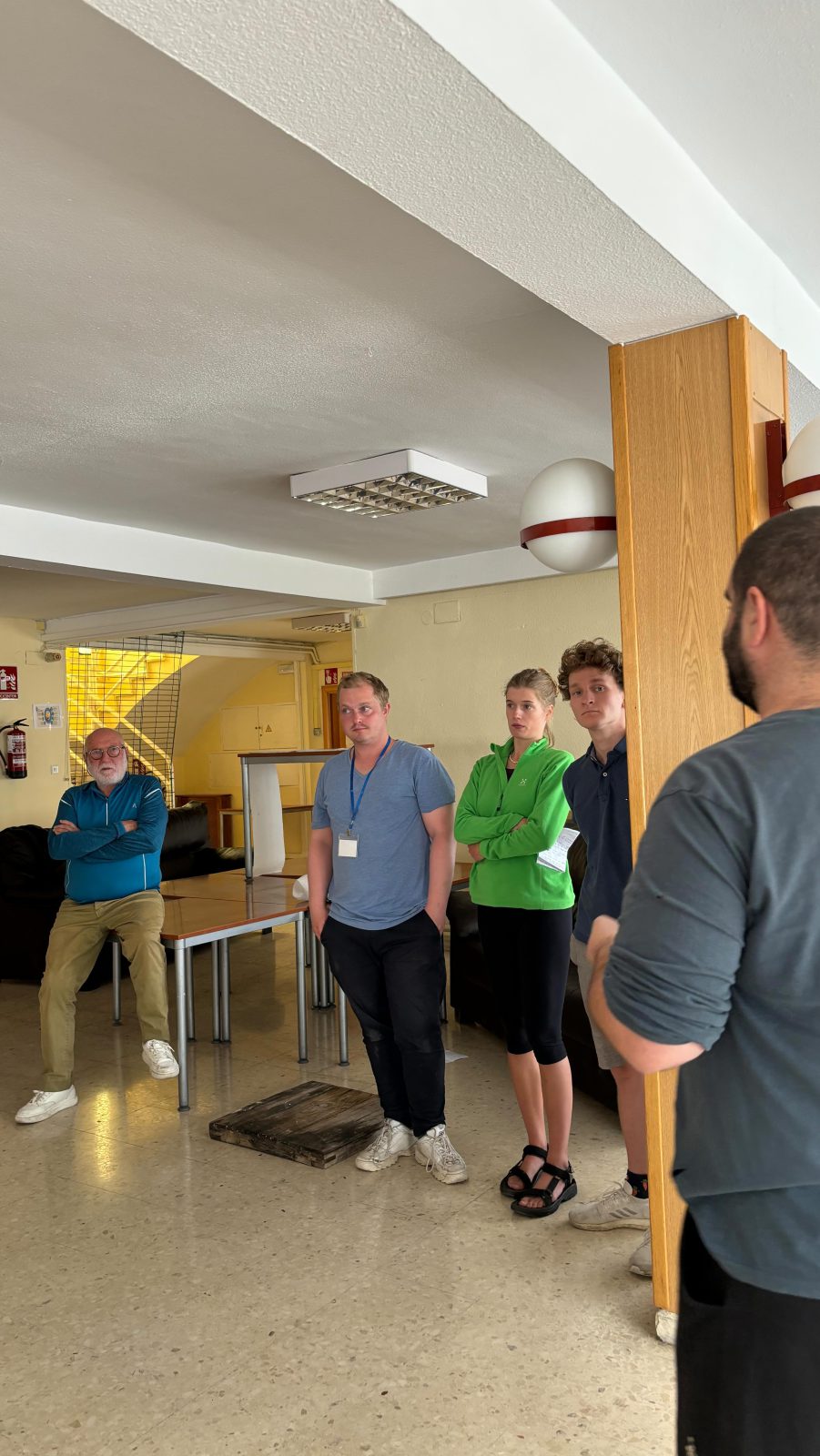
The project activity took place between 07-13 June 2024 ( 6 full-working days - 2 travel days ) in Alcala la Real,Spain with the participating organisations from Spain Hungary,Türkiye, Denmark, Romania,France, Portugal,Serbia, Italy with 21 participants. We have included 2 participant per country ( 1 youth worker and 1 young person who is working in the association in voluntary basis ). The project activity had four phases but the mobility part of the programme is planned as 6 full day programme. Prior to the mobility activity, there was virtual activities and after the activity, we implemented follow-up activities which are explained below.
A1. Online Preparation Module ( April 2024- June 2024 )
Participants engaged on a virtual set of activities ( getting to know each other, case studies, readings and etc. ) prior to the implementation of the mobility. Our main objective to implement these activities was to increase the knowledge level of the participants so that they have more less exactly the same knowledge about the the theory of ethics and they are prepared about the training course fully.
A2. Case Study in Ethical Issues in Youth Work Participating Countries ( May 2024- June 2024 ):
During the virtual module, the participants worked with their own communities to make a case study with the methodology well-known and developed by Robert Yin (Case Study Research: Design and Methods). They used the guidelines provided by us and it helped them to gain a research experience and learn about the ethical issues in their communities.
A3. – Ética del trabajo en el ambito de la juventud - Formación para trabajadores en el ámbito de la juventud - Training Course (June 2024 ) :
The themes of the training was : Ethics in Youth Work, Ethical Challenges in Participating countries, Ethics Education in Youth Work, Development of Code of Conduct for our organisations to implement Erasmus+ and Local projects along with Erasmus+ and ESC Programmes.
Day Programme of Training Course and Themes of the Days:
1st Day : Arrivals, Welcome Evening
2nd Day : Getting to Know Each Other, Ice Breakers & Trust Building, Non-Formal Education and Youth Pass, How I define Ethics? – Recap of Virtual Module, Evaluation of the Day
3rd Day : Ethics in Youth Work, Understanding the Ethical Dilemmas through Case Studies, Ethics in Youth Research and Usage of Case Studies
4th Day : Developing code of conduct for our organisations, Explore the ethical practices and dilemmas in the youth work practices, Evaluation of the Day
5th Day : Challenging unethical practices in ourselves : Personal Action Plans, Visits to Local NGOs
6th Day : Introducing the code to the beneficiaries : How and When?, Developing an ethics education process,Teaching Ethics to Each other ( Practice )
7th Day : Erasmus+ Programme , Follow - up Actions, General Evaluation , Farewell Party
8th Day : Departures
Step 4 – Follow-Up Activities (June 2024 - December 2024)
After the implementation of the training course, the participants learnt about ethics in youth work and the trainers mentored them about the implementation of their own activities to use the code of conduct, personal action plan and ethics education plans in their own communities.
Participant profile :
- 18-50 years old
- Working in an NGO as project coordinator, youth worker or youth leader
- Willing to develop code of conduct and train the staff of their organisation about the ethics of youth work
- Willing to implement educational activities focusing on the ethics education for the young people in non-formal out-of-school context
- Willing to combine the theory and practice from ethics perspective
- Motivation to participate in a learning process in international and intercultural environment
- Willing to share experience of the mobility after their return
-Has sufficient level of English ( B1 – C1 ) to involve to the discussions and co-develop activities with the other participants
-Have lack of knowledge on youth studies but have experience on youth practice
Impacto
The project implemented several activities to increase the capacities of youth workers to deal with the ethical issues in their daily work in a efficient manner with the skills and knowledge that they gained during the implementation of the project. Therefore, the partner organisations gained organisational know-how due to involvement of their staff to the project and they became able to provide activities by considering ethical standarts within the youth work that they implement with their target groups. The youth workers benefited from the project in their daily work with young people in following aspects :
- Competences to deal with challenging issues from a ethical standpoint : The project increased the understanding of ethics within youth work practices among the youth workers and making them enable to understand and deal with the challenging issues during their work by increasing their skills in this regard. Thus, they became able to make ethical decisions within their daily work practices. A youth worker needs to approach ethical problems and ethical dilemmas differently as there is a different focus. There is a clear, although somewhat difficult decision to be made with an ethical problem. Thus, by
simply through the implementation of the virtual and face to face activities, the youth workers involved in the project gained competences to deal with challenging issues not only during the project but after the project life time.
- Increased knowledge on how to develop ethical organizations: The youth workers became able to develop policy papers considering the ethical issues during the project phase that was and internalised as code of conduct mechanism for the organisations involved in the project. They involved the young people this process as one of the main aspect of the ethics in the youth work that decisions should be taken by involving the young people in the decision making processes. Therefore, the youth workers became more motivated and involved to develop ethical organisational practices.
- Ethics in Youth Work : The youth workers involved in the project gained skills to educate young people in ethics and created educational programs concerning the ethical questions that we have in our lives and surroundings. Thus, they became able to provide new educational activities for the young people specifically in the field of ethic which was not done before. Moreover, the youth workers gained research skills during the implementation of the project within the virtual module, we made them discuss and learn about the ethical practices within the ethics of development and implementation of these measures to youth work.
-Youth Analysis and Research : The youth workers have less skills when it comes to implement analysis or research or case studies within their organisational structure or within their community. During the virtual module we asked the participants to develop the cases to study during the face to face activity. We provided them with the case study research principles ( Robert Yin - Case Study Research: Design and Methods (Applied Social Research Methods) ) to make them understand how to implement case studies and why it is necessary not only using for the ethics but using for the projects and the activities. They became able to use this skills on :
- Educational Activity Development
- Monitoring and Evaluation of Activities / Changes on Young people
- Project development and evidence-based advocacy for the young people
- Ethics of Project development and implementation
These strategies gave youth workers an opportunity analyse and understand the issues of the young people in their own communities compherensively due to case study of their own communities regarding to a singular problem.
-Network of Youth Work Professionals from Different Countries : The project included 9 countries into its implementation and the participants developed activities during the week jointly which gave fruit to the development of new partnerships after the implementation of project. Therefore, the youth workers develop a tendency to develop new projects concerning the ethics and ethics education in the field of youth work.
Socios
- 🇪🇸Asociación Socio-Cultural VerdeSur Alcalá
España - 🇭🇺Fiatalok a részvételért Egyesület
Hungary - 🇹🇷Youth Development and Enterprise Association
Türkiye - 🇵🇹Associação Inspira! - Intervenção juvenil e ambiental
Portugal - 🇩🇰DANISH YOUTH TEAM
Denmark - 🇷🇴ASOCIATIA TINERILOR CU INITIATIVA CIVICA
Romania - 🇫🇷Association de Développement Rural International du Bas-Ségala
France - 🇷🇸Development Center of Vojvodina
Serbia - 🇮🇹VulcanicaMente APS
Italy
De Instagram
Los Reels se cargan desde Instagram al reproducirlos.
Noticias relacionadas

Cofinanciado por la Unión Europea. Las opiniones y puntos de vista expresados solo comprometen a su(s) autor(es) y no reflejan necesariamente los de la Unión Europea ni los de la Agencia Nacional Española para Erasmus+ Juventud y el Cuerpo Europeo de Solidaridad (INJUVE). Ni la Unión Europea ni la autoridad concedente pueden ser consideradas responsables de ellos.